Gut Health & Nutrition Guidelines: A Functional Nutrition Perspective
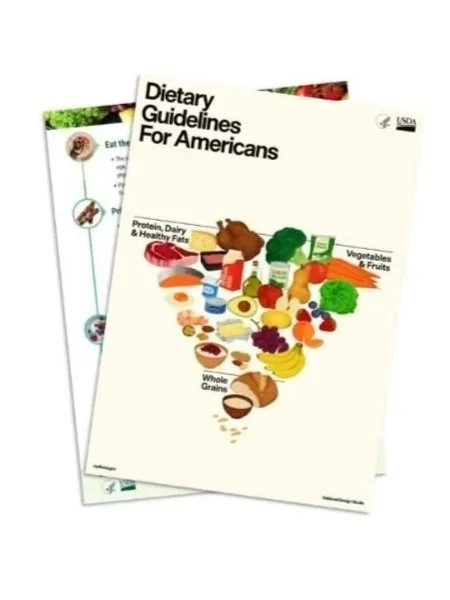
You might remember the old food pyramid where whole grains sat at the base. Now you might be scratching your head thinking, what the &$%# happened? Not to mention, there have been several iterations from the old food pyramid to MyPlate and now back to a pyramid (inverted nonetheless!)
The current nutrition guidelines look like the complete opposite of the old pyramid—and this is exactly why nutrition and gut health guidance can feel so confusing.
The Dietary Guidelines for Americans are meant to provide food-based recommendations to promote health, help prevent diet-related chronic disease, and meet basic nutrient needs. These guidelines are designed for the general population, not as individualized nutrition plans—and that distinction matters, especially when it comes to gut health, digestive disorders, eating disorders, and many other disorders!
Chronic disease rates continue to rise, yet access to preventive nutrition care remains limited. Insurance coverage for preventative nutrition services, along with the social determinants of health, are major barriers in our healthcare system. In this blog, I’ll break down the pros and cons of the nutrition guidelines through a gut health and food relationship lens.
My perspective is shaped by over six years of experience working in mental health care, integrative medicine, my functional nutrition private practice, and a Federally Qualified Health Center serving under-resourced populations. There’s a lot of noise around these guidelines, so let’s simplify them through a digestive health and food relationship framework.
Pros & Cons of the Nutrition Guidelines Through a Gut Health & Food Relationship Lens
Gut Health & Fermented Foods
Pro: Gut Health Is Finally Mentioned
The guidelines finally acknowledge gut health and highlight the benefits of fermented foods for supporting the gut microbiome and digestive health. Often missing in the American diet, 1-2 servings of fermented foods/day can help improve the gut and impact overall health!
Con: Fermented Foods Aren’t Right for Everyone
Fermented foods may not be appropriate for your gut right now. Individuals with histamine intolerance, SIBO, or active gut inflammation may experience worsened symptoms when consuming fermented foods. Personalized nutrition and working with a professional can help you navigate this!
Real Food, Variety, and Color in the Nutrition Guidelines
Pro: Emphasis on Whole, Minimally Processed Foods
The guidelines encourage eating “real food” over ultra-processed foods and emphasize variety, color, and nutrient density. Fresh, frozen, and canned foods are all included—supporting flexibility and accessibility.
Not all processed foods are created equal, and this nuance is essential for both gut health and food relationships.
Con: Food Access and Cost Are Overlooked
The guidelines fail to adequately address food access, affordability, and socioeconomic factors, which strongly influence food choices and long-term health outcomes.
If food access is a concern, this Maryland Food Bank tool can help locate food resources:
https://mdfoodbank.org/find-food/
From a food relationship perspective, processed foods may be necessary to maintain adequate intake. For individuals with neurodivergence, autism, or feeding challenges, processed foods are often safer and more accepted options. Demonizing foods can worsen stress and negatively impact gut health and disordered eating.
Fiber, Whole Grains, and Digestive Health
Pro: Fiber Is Recognized as Important for Gut Health
The guidelines emphasize fiber intake from whole grains, which supports digestion, blood sugar balance, and a healthy gut microbiome. Grain preparation to reduce phytates should be considered here so the vitamins and minerals are released from the grain.
Con: Grain Recommendations Are Reduced
There is a noticeable reduction in recommended grain intake. Grains provide essential vitamins and minerals and can absolutely be part of a healthy diet. Fiber needs should be individualized based on gut health, activity level, and dietary pattern.
For those with SIBO or inflammatory bowel disease (IBD), whole grains may be difficult to tolerate during flares.
Sugar Intake and Gut Health
Pro: Clearer Guidance on Added Sugars
The updated guidelines provide gram-based recommendations for added sugars, which is more practical than prior versions.
Excess sugar can negatively impact gut health and the microbiome, contributing to inflammation. Reducing added sugar can support gut healing in conditions like leaky gut, autoimmune disease, and mold toxicity, in addition to having beneficial effects to improve metabolic dysfunction.
Con: “Avoid” Is Unrealistic
Using the word avoid is extreme and unrealistic in today’s food system, where sugar is present in many foods.
Unless medically necessary or there is a food allergy, no food needs to be completely off-limits. From a healthy food relationship standpoint, foods like cookies and brownies can absolutely fit into a balanced diet. Birthday cake anyone?
Fats, Full-Fat Foods, and Digestive Health
Pro: Full-Fat Foods Are No Longer Demonized
The guidelines move away from the low-fat messaging that dominated past decades. Removing fat often led to increased sugar and additives, which did not improve health or gut outcomes. Full fat varietys of things such as yogurt and dairy may help promote satiety.
Con: Fat Tolerance Is Highly Individual
Saturated fats are still present in full-fat foods. The guidelines continue to limit saturated fats to 10% of total calories. For a 2000 calorie diet that comes to 22 grams/day. To give you perspective, one 8 oz serving of whole milk contains about 5 grams of saturated fat. Tolerance to fat varies based on gut health, genetics, and health goals. Conditions like gastroparesis, gallbladder dysfunction, and SIBO require careful fat consideration.
Protein Intake and Gut Health
Pro: Protein Is Prioritized at Meals
Protein supports blood sugar balance, satiety, and muscle health. Previous protein recomendations may have been too low.
Con: Fiber Intake May Suffer, Protein Needs Should be Individualized
With the heavy emphasis on protein in recent nutrition trends, fiber intake is often overlooked. For some groups, like with certain stages of kidney disease, protein needs actually decrease and the type of protein (plant or animal) impacts disease progression. Additionaly, protein digestion can be challenging for individuals with low stomach acid, enzyme insufficiency, or chronic digestive conditions.
Calories, Metabolism, and Food Relationship
Pro: Individualized Calorie Needs Are Acknowledged
The guidelines recognize that calorie needs vary based on age, sex, body size, and physical activity.
Con: Not All Calories Affect the Body the Same Way
While calories are not nutritionally equal, they is also an emotional wellbeing component that has to be considered. While no one would likely say a candy bar vs. a chicken, broccoli, and rice meal are nutritionally the same, the context of the psychological aspects of the food relationship are important! Obsessing over eating “clean” or demonizing a candy bar are both forms of disordered eating to consider in the context of those calories!
Alcohol and Gut Health
Pro: Reduced Alcohol Intake Is Encouraged
The guidelines align with research showing alcohol negatively affects gut health, increases intestinal permeability, and disrupts the microbiome.
Con: Social and Cultural Context Is Missing
Alcohol often plays a role in social connection and culture, which is rarely acknowledged in nutrition guidelines.
Final Thoughts: Gut Health and Food Relationship Work (Eating Disorders & Disordered Eating) Requires Personalized Nutrition
Food is deeply tied to culture, identity, and emotional well-being. One-size-fits-all nutrition guidelines do not account for gut health, food access, or one’s food relationship.
Creating a personalized nutrition plan that considers digestive health, social context, and emotional well-being is essential for long-term physical and mental health.
If you’d like to check out the latest guidelines please follow this link.
Let’s dig through the noise ourselves and find YOUR best nutrition plan!
Click the button below to get started!